How Fotona Laser Treatments Improve Skin Elasticity
Skin elasticity is one of those qualities people rarely think about until it starts to change. In a younger face, the skin has bounce. It snaps back after expression, resists creasing, and holds a smoother contour over the cheeks, jawline, neck, and around the eyes. Over time, that resilience fades. Patients often describe it in plain terms: their skin feels thinner, looser, less firm, less responsive. Makeup sits differently. Smile lines linger longer. The lower face can begin to look heavier even when body weight has not changed.
That loss of elasticity is not a single problem with a single cause. It reflects slower collagen production, fragmented elastin fibers, cumulative sun exposure, low-grade inflammation, and simple aging of the skin’s support structure. This is where laser technology has become especially useful, and where Fotona Laser Treatments have earned attention. They are often chosen not because they promise a dramatic overnight transformation, but because they can stimulate the biological processes that help skin behave more like healthier, more resilient skin.
What makes these treatments worth discussing is that elasticity sits at the center of how skin looks and functions. Patients often ask for a reduction in wrinkles, or less laxity, or a brighter texture. Those concerns are related, but elasticity is deeper than surface appearance. When the skin becomes more elastic, many visible concerns improve at once, often in a more natural-looking way than with approaches that simply tighten, freeze, or fill.
What skin elasticity actually means
Elasticity is the skin’s ability to stretch and return to its original position. That depends on the integrity of collagen and elastin in the dermis, along with hydration, circulation, and the quality of the extracellular matrix. Collagen provides strength and structure. Elastin contributes recoil and flexibility. When both are healthy, skin has tone. When they decline, skin starts to fold, drape, and recover more slowly after movement.
Patients sometimes confuse elasticity with skin thickness, and the two are related but not identical. A person can have fairly thick skin that is still lax, especially after sun damage. Another person may have thin skin that remains surprisingly tight for their age because collagen support has been preserved. This distinction matters because laser treatments are not just polishing the surface. The better systems target deeper tissue remodeling, where real structural change happens.
In practical terms, improved elasticity often shows up as subtle but meaningful changes. The lower eyelids may look less crepey. The cheeks can regain a firmer, more lifted quality. Jawline definition can sharpen slightly. Fine lines may soften because the skin no longer folds as easily at rest. Patients usually notice this first when washing their face or applying moisturizer. The skin feels denser, springier, less papery.
Why elasticity declines earlier than many people expect
Loss of elasticity does not start at 50. In many patients it begins quietly in the early 30s, sometimes sooner if there has been heavy UV exposure, smoking, chronic stress, major weight fluctuation, or naturally thinner skin. Hormonal changes also matter. Perimenopause and menopause often accelerate collagen loss, which is why some women notice a sudden shift in skin firmness over a relatively short period.
Sun exposure remains the biggest external factor in premature loss of elasticity. Ultraviolet radiation breaks down collagen, disrupts elastin, and creates the uneven, rough texture associated with photoaged skin. This is why someone with minimal wrinkles can still have loose, damaged skin if they have spent decades outdoors without protection. It is also why any discussion of laser rejuvenation has to include daily sunscreen, because treatment can stimulate repair, but ongoing UV exposure will continue to work against those gains.
There is also a genetic piece. Some patients have strong facial structure and better baseline collagen support. Others are simply more prone to laxity. Treatment plans should reflect that reality. Laser therapy can improve the quality of aging skin, but it will not make every face age in the same way.
Where Fotona fits into the conversation
Fotona is not one single treatment. It is a laser platform that uses different wavelengths and treatment modes for different skin goals. In aesthetic practice, the name often comes up in the context of noninvasive tightening, resurfacing, collagen stimulation, and overall rejuvenation. What makes it especially relevant for skin elasticity is its ability to deliver controlled thermal energy at varying depths.
That detail matters. A superficial treatment can improve brightness and texture, but elasticity depends on what happens beneath the surface. Fotona systems are designed to create heat in tissue in a precise way, encouraging the body’s repair response without surgery. When done well, that thermal effect stimulates fibroblasts, the cells responsible for producing collagen and other structural proteins. Over the following weeks and months, the skin gradually rebuilds itself.
This is why good laser work requires patience. A patient may leave the office with some immediate tightening from tissue contraction and mild swelling, but the more meaningful change tends to develop over time. New collagen formation is not instant. Most people see a progressive improvement in tone and firmness over several months, especially after a series of sessions.
How controlled heat improves firmness
The phrase “collagen stimulation” gets used so casually that it can sound vague, but the biology is straightforward. When laser energy heats tissue to the right threshold, it creates a controlled injury that is not meant to damage the skin in a destructive way. Instead, it triggers a wound-healing response. Fibroblasts become more active. Collagen remodeling begins. Existing collagen can contract, and new collagen can be produced over time.
With Fotona Laser Treatments, the treatment parameters can be adjusted depending on whether the goal is gentle tightening, textural improvement, deeper rejuvenation, or a combination approach. Some protocols use more superficial passes, while others deliver energy deeper into the dermis or even mucosal tissue for internal support. That depth flexibility is one reason the platform is widely used for areas such as the face, neck, and around the eyes, where tissue quality differs significantly.
In clinic, the patients who benefit most from this tend to be those in the early to moderate stages of laxity. They do not necessarily need surgery, but they want something more structural than facials, peels, or topical products. They often say they look tired, soft, or slightly sagged rather than deeply wrinkled. For them, a collagen-focused laser can be a very sensible middle ground.
Surface improvement versus true elasticity change
One of the most important distinctions in laser aesthetics is the difference between making skin look better and helping it behave better. Resurfacing can reduce roughness, pigment, and fine lines. That has real value. But if the underlying issue is diminished recoil and support, then skin may still appear loose even after the surface looks brighter.
Fotona’s appeal is that many protocols can address both levels at once. A practitioner might use one treatment mode to refresh the outer layer and another to heat deeper tissue for tightening. When those layers are treated in a coordinated way, results often look more cohesive. The skin does not just reflect light better, it also sits better on the face.
That said, there are limits. A laser cannot replicate the mechanical lift of surgery in someone with significant jowling, heavy neck laxity, or very advanced tissue descent. Some patients are disappointed when they expect a noninvasive treatment to create a facelift-level result. Good consultation matters here. The best outcomes happen when the technology is matched to the degree of laxity, skin thickness, age, healing capacity, and expectations.
Why Fotona is often chosen over more aggressive options
Not every patient wants downtime, and not every patient is a candidate for aggressive ablative treatment. Traditional resurfacing can produce excellent change, but it often comes with a longer recovery period, more social downtime, and a different risk profile. Fotona protocols can often be tailored to create meaningful elasticity improvement with more manageable recovery.
In real practice, this becomes especially relevant for professionals, parents, public-facing workers, and patients who simply do not want to disappear for two weeks. Mild redness, warmth, dryness, or a sandpapery texture for a few days is usually easier to accept than prolonged crusting or peeling. That does not mean the treatment is trivial. It still requires proper aftercare and thoughtful parameter selection. But for many people, the balance between results and recovery is favorable.
A second advantage is versatility. The same platform may be used to address crepey eyelid skin, perioral lines, diffuse facial laxity, or neck texture, though technique and intensity will differ. This adaptability allows the treatment to be https://pastelink.net/pe792pg5 customized rather than applied as a generic one-size-fits-all protocol.
What treatment feels like and what patients usually notice afterward
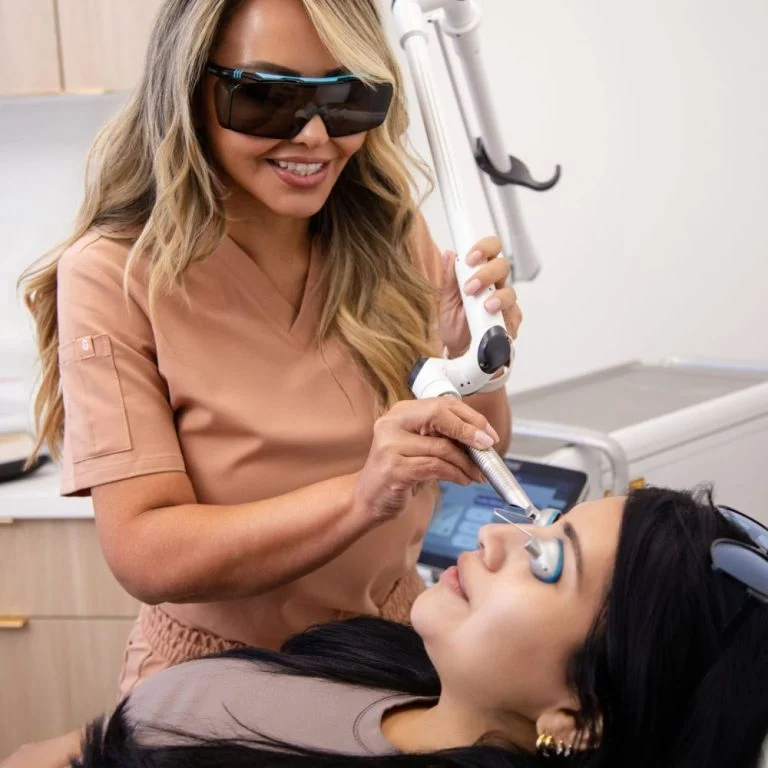
Sensations vary depending on the specific mode used, but many patients describe the treatment as a series of quick warm pulses. Some settings feel like a snapping heat, others more like sustained warmth. Numbing may or may not be needed, depending on intensity and area treated. The periocular area and upper lip tend to be more sensitive than the cheeks.
Right after treatment, the skin is often pink and warm, similar to a sun-exposed feeling. With more intensive settings, swelling can appear, especially around the eyes. Some patients notice an immediate sense of tightness. Part of that is temporary, caused by mild tissue edema and early collagen contraction. The more durable improvement appears gradually.
A common timeline looks something like this. During the first week, the skin can feel smoother and a little firmer. By four to eight weeks, tone often begins to look more refined. At the two- to four-month mark, the elasticity changes become more visible. The cheeks may look less slack, makeup may settle less into fine lines, and the overall skin quality tends to appear more rested. When a series is done properly, these small gains can add up.
Areas where elasticity improvement tends to stand out
Some regions respond especially well because even modest collagen remodeling makes a visible difference. The lower eyelids are a good example. Crepey skin in that area can soften when dermal support improves, even if the treatment does not erase every line. Around the mouth, firmer skin can reduce the etched look that develops from repeated expression and age-related thinning. On the neck, better tissue quality can improve texture and mild laxity, though stronger neck bands or heavier sagging usually need other strategies as well.
The jawline is where expectations need the most nuance. Fotona Laser Treatments can sharpen a mildly softened jawline by improving skin tone and subtle laxity. They are less effective when fullness under the chin is primarily from fat, or when tissue descent is advanced. In those cases, combining treatments may be more sensible than relying on laser alone.
Who tends to be a good candidate
The best candidates are usually people with mild to moderate skin laxity, early crepiness, thinning skin, or an overall loss of firmness that is not severe enough to justify surgery. They may be in their 30s, 40s, 50s, or beyond. Chronological age matters less than tissue quality.
A few factors strongly influence whether treatment is a good fit:
- mild to moderate looseness rather than heavy sagging
- willingness to complete a series, not just one session
- realistic expectations about gradual improvement
- consistent sun protection before and after treatment
- no active skin infection or uncontrolled inflammatory condition in the treatment area
Skin type also matters. Some laser settings are safer across a broader range of tones than others, but every patient needs an individualized assessment. History of melasma, post-inflammatory hyperpigmentation, scarring tendencies, or recent tanning should always be discussed. In experienced hands, risks can be reduced, but they should never be ignored.
Why treatment plans often work better in series
One of the most common reasons people underappreciate laser tightening is that they expect a single session to produce a dramatic endpoint. With collagen remodeling, cumulative treatment is usually more effective. A series gives the skin repeated stimulation, which tends to produce steadier improvement in elasticity.
A typical plan may involve several sessions spaced a few weeks apart, followed by maintenance once or twice a year depending on age, baseline laxity, lifestyle, and skincare habits. Think of it less like flipping a switch and more like training tissue to rebuild. Patients who understand this process are usually happier because they can see the trajectory rather than judging the treatment too early.
There is a practical side to this as well. Conservative, staged treatment is often safer and more predictable than pushing too hard in one visit. Especially on delicate areas such as the eyelids or neck, gradual progress is often the wiser path.
Combining laser with other strategies for better elasticity
Laser can stimulate repair, but it works best when the rest of the skin environment supports that repair. A patient who treats aggressively but continues to tan, smokes regularly, sleeps poorly, and ignores basic skincare will not hold results as well as someone with more supportive habits.
For patients focused on elasticity, combination care often matters more than any single device. This does not mean piling on every treatment available. It means choosing tools that address different parts of the problem. Neuromodulators reduce repetitive folding in highly expressive areas. Biostimulatory injectables may improve support in selected patients. Radiofrequency or ultrasound may be considered for additional tightening in some cases. Prescription retinoids and antioxidants help maintain collagen health at home.
What matters is judgment. More treatment is not always better treatment. Overdoing heat-based procedures on already inflamed or barrier-impaired skin can backfire. In practice, restraint often produces more elegant results.
Recovery and aftercare shape the final result
Aftercare is rarely glamorous, but it is where a lot of preventable problems are avoided. Skin that has been heated and stimulated needs protection while it recalibrates. The usual advice is simple, but it matters: gentle cleansing, bland hydration, avoiding unnecessary actives for several days, and strict sun avoidance with broad-spectrum protection.
Patients with a history of pigment issues need especially careful follow-through. Even a successful treatment can be undermined by post-treatment sun exposure. This is one of the few points worth making bluntly. A great laser session followed by careless UV exposure is a waste of money at best and a trigger for complications at worst.
A practical aftercare routine often includes:
- a gentle, non-exfoliating cleanser
- a plain moisturizer that supports the barrier
- mineral or broad-spectrum sunscreen used consistently
- temporary pause on retinoids, acids, and scrubs if the skin feels reactive
- close contact with the treating clinic if swelling, blistering, or unusual discoloration appears
The details can vary with treatment intensity, so the treating provider’s instructions should always take precedence over generic advice.
What kind of results are realistic
Realistic results from Fotona Laser Treatments are often more satisfying than exaggerated promises. Skin can look firmer, finer-textured, and more resilient. Fine lines may soften. Crepiness may reduce. Mild laxity can improve. The face may look fresher without looking altered. For many patients, that is exactly the goal.
What it will not do is permanently stop aging or replace surgery in advanced cases. It will not eliminate deep folds created by volume loss, nor will it lift very heavy tissue to the degree a lower facelift can. It also will not work equally fast on every patient. Someone with good healing capacity, modest sun damage, and consistent aftercare may respond beautifully. Someone with severe photodamage, heavy smoking history, and significant collagen depletion may improve more slowly and more modestly.
That variability is normal. It is not a sign the technology does not work. It is simply a reminder that skin is living tissue, not fabric being pulled tighter.
Questions worth asking before booking
A smart patient does not just ask whether a device is popular. They ask who is operating it, how often they treat laxity specifically, what settings or protocol they recommend for their skin type, what the expected downtime is, and what alternatives might suit them better. The device matters, but the operator matters more.
A careful consultation should include an honest look at whether the concern is truly elasticity loss, or whether volume loss, muscle activity, pigmentation, or facial fat distribution is the main driver of the aged appearance. When that distinction is missed, even technically good treatment can feel disappointing because it addressed the wrong problem.
It is also reasonable to ask for before-and-after examples of patients with similar skin quality and goals. Not identical faces, but similar patterns of laxity. That conversation tends to reveal whether the provider has practical experience and whether the expected outcome has been framed responsibly.
Why elasticity-focused treatment has become so popular
The broader shift in aesthetics has moved away from obviously “done” faces and toward better tissue quality. People still want smoother skin and fewer lines, but many now care just as much about firmness, texture, and natural movement. They want to look healthier, not inflated. That change has made collagen-stimulating treatments more relevant than ever.
Fotona Laser Treatments fit that shift well because they can improve the underlying condition of the skin rather than masking every age-related change. For the right patient, that creates one of the most appealing kinds of cosmetic result: visible, but hard to pinpoint. Friends may say the skin looks rested, toned, or refreshed without immediately knowing why.
That kind of improvement is often the most durable aesthetically, because it respects the face instead of trying to force it into an unnatural version of youth. Better elasticity does not erase age. It restores some of the skin’s ability to carry age well. For most patients, that is a far more useful goal.
OMNIA Wellness Center
Address: 16430 Ventura Blvd Ste 207, Encino, CA 91436
Phone number: +18183868511
FAQ About Fotona Laser Treatments
What is a Fotona laser good for?
A Fotona Laser system is a versatile, dual-wavelength medical laser used primarily for non-surgical skin tightening, anti-aging rejuvenation, and dermatological treatments.
How much does the Fotona laser cost?
The cost of a Fotona laser depends heavily on whether you are looking to purchase a laser machine for a medical practice or are a patient seeking a laser treatment at a medspa.
Is a Fotona laser worth it?
A Fotona laser treatment is generally worth it if you want non-surgical skin tightening, improved texture, and collagen stimulation with very little downtime.